
Wellness Without Burnout: Building Habits You Can Keep
Staying consistent with wellness and self-care goals is a challenge almost everyone faces, whether you’re trying to move more, manage stress, sleep better, or simply feel more balanced day to day. Consistency—not intensity—is what turns good intentions into lasting habits. The question isn’t whether you care about your well-being, but how you keep showing up for it when motivation fades or life gets busy.
A quick snapshot of what actually helps
Sticking with self-care works best when goals are realistic, routines are flexible, and progress is measured in small wins rather than dramatic overhauls. When wellness fits into your life instead of fighting against it, consistency becomes far more achievable.
Why consistency is harder than it sounds
The biggest obstacle to self-care isn’t laziness; it’s overload. Many people start with overly ambitious plans—daily workouts, perfect diets, rigid schedules—and burn out quickly. Add work demands, family responsibilities, or unexpected stress, and even the best plans can collapse. Recognizing these pressures upfront helps you design habits that survive real life.
Start small, but start clearly
Vague goals like “be healthier” or “practice more self-care” are hard to follow consistently. Clear, specific intentions give your brain something concrete to act on.
Examples of clearer goals:
Walk for 15 minutes after dinner, three days a week
Go to bed by 11:00 p.m. on weekdays
Drink a glass of water first thing in the morning
Small goals may feel unimpressive, but they build trust with yourself—and that trust fuels consistency.
A simple weekly wellness plan
Here’s an example of how self-care can look when it’s woven into everyday routines rather than treated as a separate project:
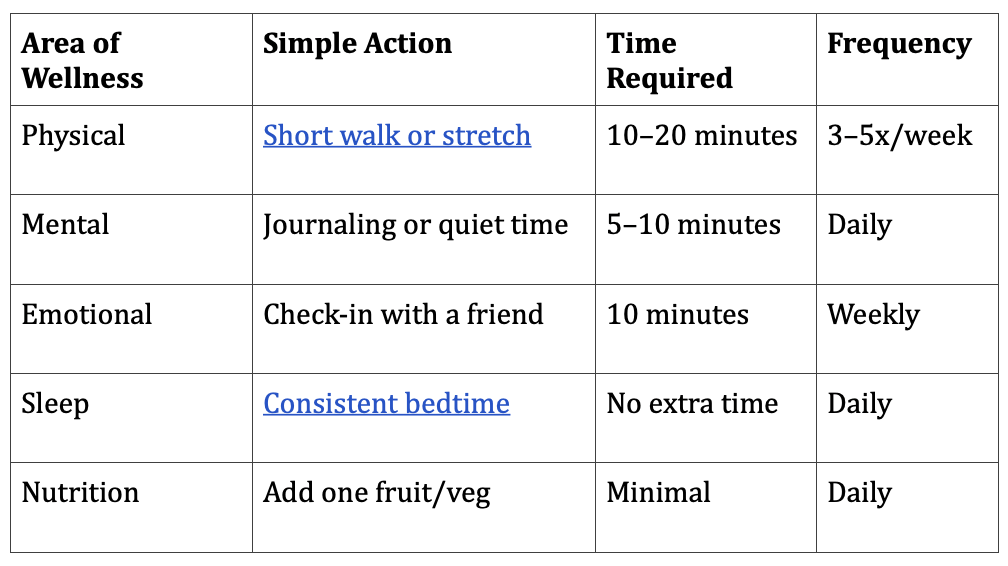
This kind of structure creates balance without pressure.
Staying true to long-term goals (including career growth)
Wellness isn’t limited to exercise and relaxation—it also includes feeling aligned with your purpose and future. Staying true to your career goals can reduce stress and increase motivation, especially when your work supports the life you want to live.
Sometimes that means changing direction or investing in yourself by going back to school through an online degree, which makes it possible to learn while you work. For example, choosing to earn a BS in computer science can help you build practical skills in IT, programming, and computer science theory while still maintaining your daily responsibilities.
A how-to checklist for building consistency
Use this checklist to keep your self-care habits grounded and repeatable:
Choose one or two habits to focus on at a time
Attach new habits to existing routines (after coffee, before bed)
Plan for “bad days” instead of quitting altogether
Track progress in a simple way (notes app, calendar checkmarks)
Review and adjust weekly, not daily
Consistency thrives on flexibility, not perfection.
Common mistakes to avoid
All-or-nothing thinking: Missing one day doesn’t mean you’ve failed.
Comparing yourself to others: Your capacity and circumstances are unique.
Ignoring enjoyment: If you hate the habit, you won’t keep it.
Overloading your schedule: Wellness should support your life, not crowd it out.
Frequently asked questions
How long does it take to build a self-care habit?
It varies, but many habits start to feel natural after a few weeks of regular practice. Focus more on repetition than timelines.
What if my schedule changes often?
Choose flexible habits that can move with your day, like short walks, breathing exercises, or brief stretches.
Is it okay to skip self-care when I’m busy?
Yes—but aim to scale down rather than skip entirely. Five minutes still counts.
How do I stay motivated long-term?
Motivation comes and goes. Systems, routines, and gentle accountability are more reliable than willpower.
Bringing it all together
Consistency with wellness and self-care goals comes from designing habits that fit your real life, not an idealized version of it. Start small, stay flexible, and treat progress as something you practice rather than perfect. Over time, those modest, repeatable actions create stability, resilience, and a stronger sense of well-being. The goal isn’t to do everything—it’s to keep going.